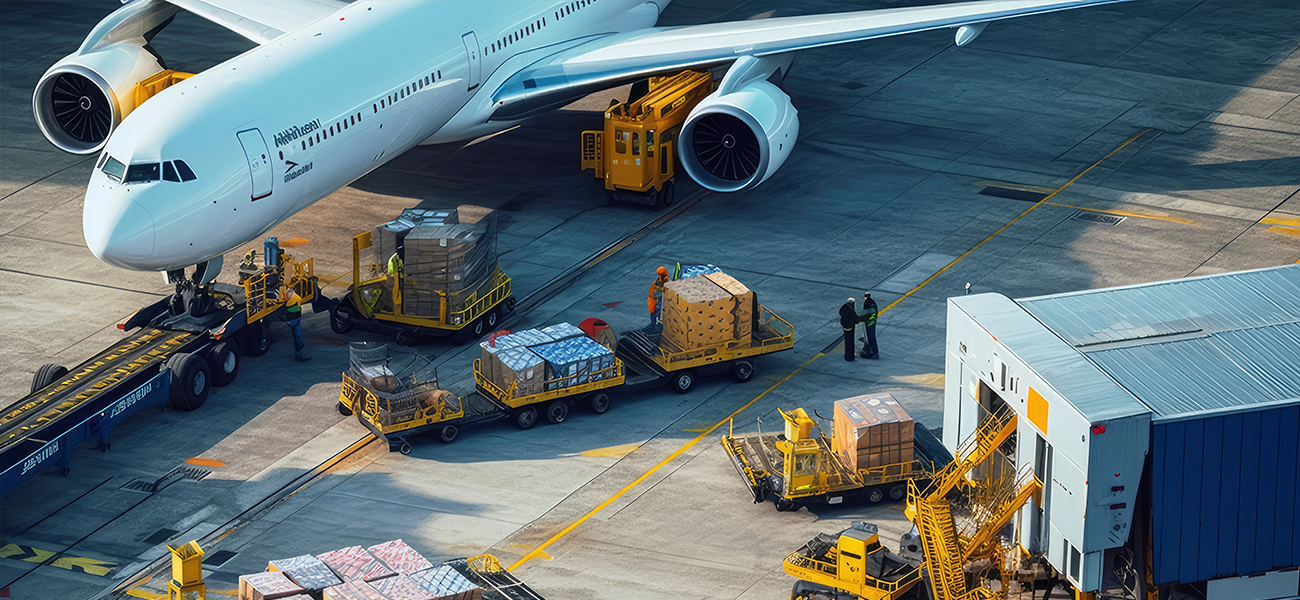
Optimise every cubic centimetre of your load: algorithmic intelligence to maximise the fill of pallets, containers, trucks and cargo aircraft in seconds, cutting transport costs and ensuring goods stability.
Business problem
Planning the loading of mixed goods by hand leads to wasted space, high transport costs and risks to material safety.
Our Bin Packing service solves these issues by automating volume calculation with mathematical precision. With this intelligence embedded in your business systems, you’ll turn logistics complexity into optimised load plans, cutting waste and ensuring structural stability.
Our solution
Optit’s Bin Packing as a Service applies advanced 3D optimisation algorithms to maximise the fill of pallets, containers and vehicles, turning complex data into precise, safe load plans.
Cuts costs: it minimises the number of vehicles and maximises their fill by volume and weight.
Ensures stability: it strictly respects centres of gravity, stackability and maximum weights.
Is flexible: it handles irregularly shaped items and client-specific loading rules.
How it works
The Bin Packing service runs a 3D simulation based on dimensional data and logistics constraints:
Proprietary algorithm: it calculates the best spatial arrangement of items (boxes, packages or pallets) in seconds.
Multi-level constraints: it accounts for permitted rotations, stackability rules, drop-off sequences by stop and goods compatibility (e.g. dangerous goods or different temperatures).
Web API integration: it connects to your ERP, WMS and TMS systems to return load plans and operational KPIs.
Benefits
Maximum fill: optimisation of the space used in pallets, trucks, containers or aircraft for immediate transport savings.
Safety and integrity: respect for fragility constraints and correct weight distribution to eliminate damage to goods and vehicle instability.
Warehouse efficiency: clear instructions that guide operators during preparation, speeding up picking and loading.
Environmental sustainability: a lower carbon footprint thanks to fewer trips needed to transport the same volume of goods.
Decision support: upfront volume assessment as early as the order-intake stage.
Discover how this solution has helped other businesses
Explore the markets where this capability helps you make the right decisions